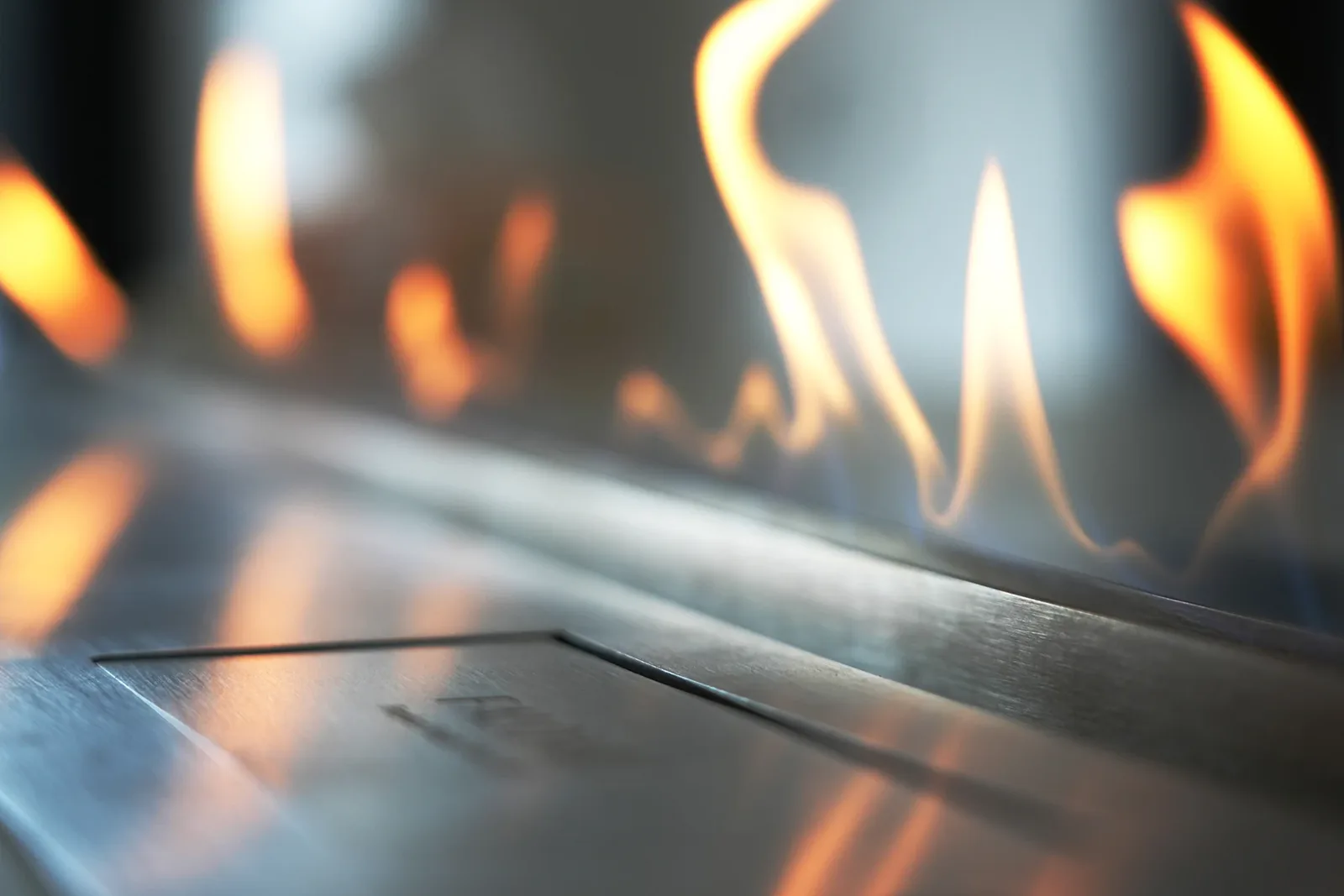
A bio-ethanol fireplace burns liquid bio-ethanol for a real flame, with no chimney and no gas line. That makes it easy to place, but fuel and safety need more care than an electric fireplace.
Fuel
Use bio-ethanol of 95% purity or more. The EVO burner fills itself from the panel or the app, stops when the tank is full and shows the fuel left.
Safety features to look for
- Flame-out protection: the fuel supply stops if the flame goes out
- Leak detection
- Tilt sensing: power is cut if the burner tilts past a safe angle
- Overheat protection: a temperature sensor stops the burner if it gets too hot
- No refuelling while hot: the fill button is locked at high temperature
- A child lock
Ventilation
An ethanol flame uses oxygen and gives off carbon dioxide and water vapour, like a candle. Keep the room ventilated, avoid small enclosed rooms such as bedrooms and bathrooms, and never refill a burner while it is hot.
Manual or smart?
A manual burner is lit with a tool, burns at a fixed flame size and has an open fuel tray with no safety protection. A smart burner like EVO lights itself, sets the flame in five steps and adds the protections above, with control from a panel or a phone.
Planning the space
Ask for the burner dimension drawing before forming the opening. For a 600 mm EVO burner the opening is 570 x 230 x 300 mm (22.4 x 9.1 x 11.8 in).